Treasure Coast Locksmith provides salt air corrosion resistant locks services in Port St. Lucie, Stuart, Fort Pierce, Vero Beach, Jensen Beach, and across the Treasure Coast. Call (772) 758-1322 for mobile service. Coastal Treasure Coast homes need corrosion-resistant lock hardware - standard zinc locks fail within 18-24 months of salt air exposure. PVD-coated Schlage, solid-brass Baldwin, and marine-grade stainless hardware survive 5 to 10 years. $225-$485 per lock installed.
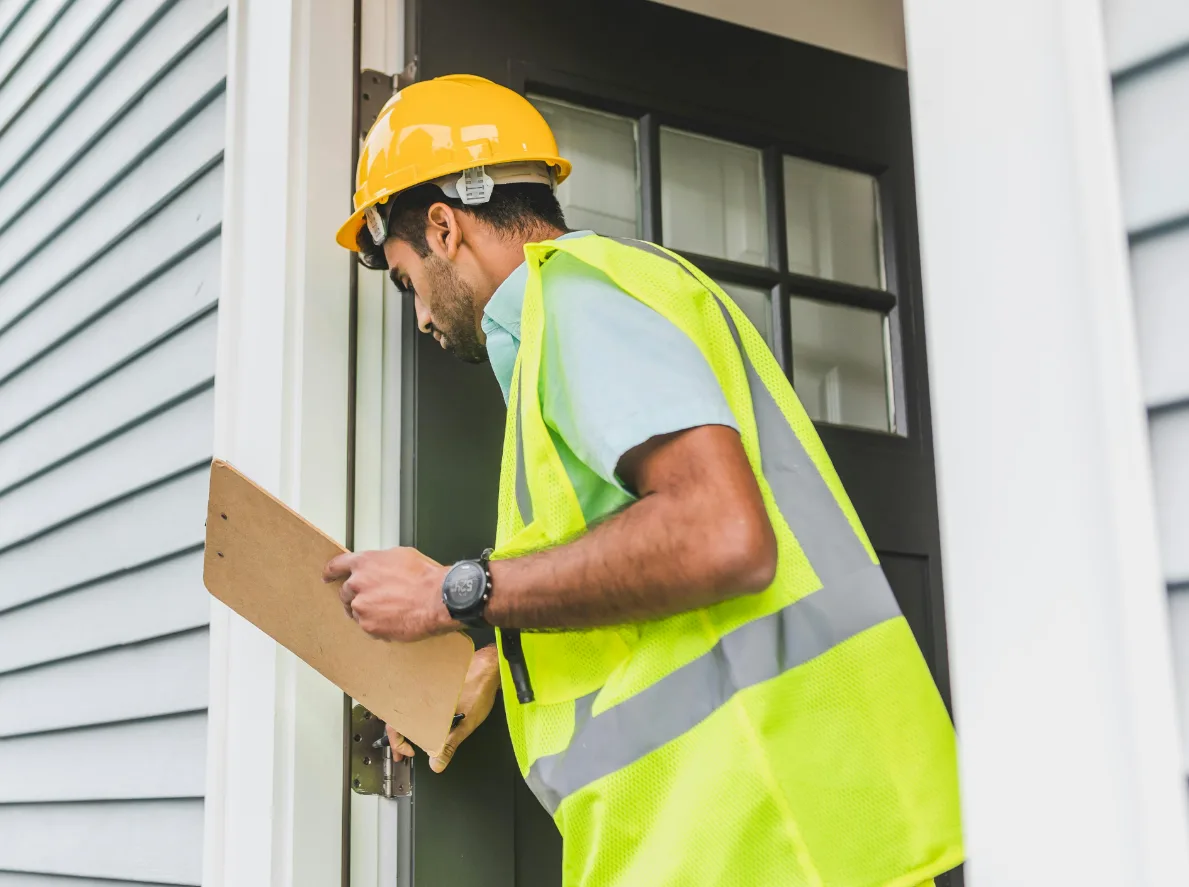
Every oceanfront home on the Treasure Coast has the same silent problem: the locks are rusting from the inside out, and you don't notice until one day the key stops turning. Most homeowners think it's a single bad lock. It is not - it is the entire hardware set, corroding in parallel because of salt air exposure.
The fix is not a repair. It is replacement with hardware specifically rated for salt-air exposure. Three options: PVD-coated brass (most affordable, 5-7 year life), solid brass (premium, 10+ year life), or marine-grade 316 stainless steel (commercial grade, 15+ year life).
We stock all three.
Treasure Coast Locksmith specializes in coastal hardware for oceanfront homes on Hutchinson Island, Jensen Beach, Jupiter Island, Vero Beach, Orchid Island, and everywhere else within three blocks of the beach.
What coastal hardware gives you
- 5-10 year coastal life - versus 18-36 months for standard hardware.
- ASTM B117 rated - 1,000+ hour salt spray testing.
- PVD coating available - physical vapor deposition that bonds to brass.
- Solid brass construction - no zinc to corrode.
- Marine-grade 316 stainless - the industry gold standard for saltwater exposure.
- HOA-approved finishes - PVD Life Satin Brass matches most coastal communities.
- Matched exterior keying - one key for every door on the property.
- Insurance documentation - for coastal home coverage renewals.
Why standard locks fail fast on the coast
The physics of salt-air corrosion are specific and unforgiving.
Common corrosion failures
- Oceanfront Hutchinson Island home with 3-year-old Grade 1 Schlage deadbolt - cylinder seized solid from chloride pitting.
- Jensen Beach condo where the sliding door hook lock corroded through its metal, leaving a hole in the casting.
- Jupiter Island home with matching Baldwin Estate hardware that held up 10 years - versus zinc replacement that failed in 2.
- Vero Beach home where all 6 exterior deadbolts failed within the same year - the whole set installed on the same day 3 years prior.
- Orchid Island home with PGT impact-rated deadbolt corroded despite NOA rating - the cylinder was zinc, not brass.
- Fort Pierce beachfront where a handle set still operated but the interior mechanism was 80% rusted, ready to fail.
- Hobe Sound home where the sun-side locks corroded 2x faster than shade-side because of UV acceleration of salt degradation.
- Stuart home 2 miles inland where a homeowner assumed they were safe - still saw 4-year lock life because of sea breeze carry.
Understanding coastal corrosion and finish selection
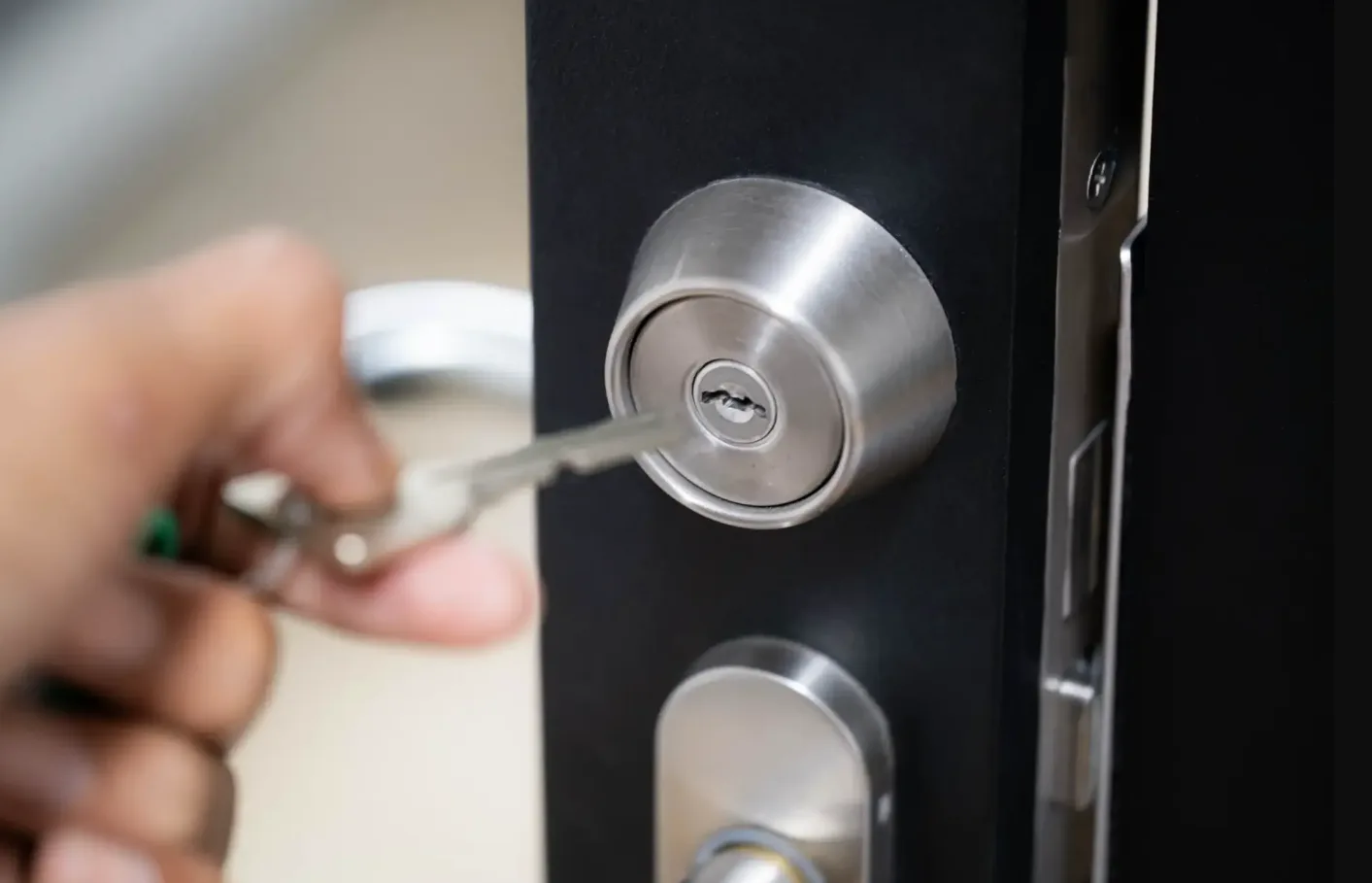
Salt air corrosion attacks metal through three mechanisms. First, chloride ion deposition accelerates oxidation of iron-based alloys (steel, low-grade stainless). Second, galvanic corrosion occurs where dissimilar metals contact each other in the presence of salt moisture - which is exactly what happens inside a standard zinc-alloy deadbolt.
Third, crevice corrosion happens in tight spaces (like pin tumbler cylinders) where salt moisture concentrates and cannot evaporate.
ASTM B117 salt spray testing is the industry standard for measuring corrosion resistance. Standard zinc-plated hardware survives 100-250 hours before visible corrosion. Chrome-plated hardware: 200-400 hours.
PVD-coated brass: 1,000-2,000 hours. Solid brass: 2,000+ hours. Marine-grade 316 stainless: 4,000+ hours.
Translating salt spray hours to real Treasure Coast service life is approximate but useful. Oceanfront exposure (first row of homes): 1,000 salt spray hours = about 18 months of service life. Three blocks inland: 1,000 hours = about 3 years.
More than half a mile inland: 1,000 hours = 7-10 years. PVD-coated brass with 2,000 salt spray hours is the minimum we recommend for oceanfront homes.
How a coastal hardware replacement works
Assessment call
Call (772) 758-1322. Tell us your address proximity to ocean and existing hardware age.
Onsite inspection
Technician verifies corrosion extent and recommends finish level.
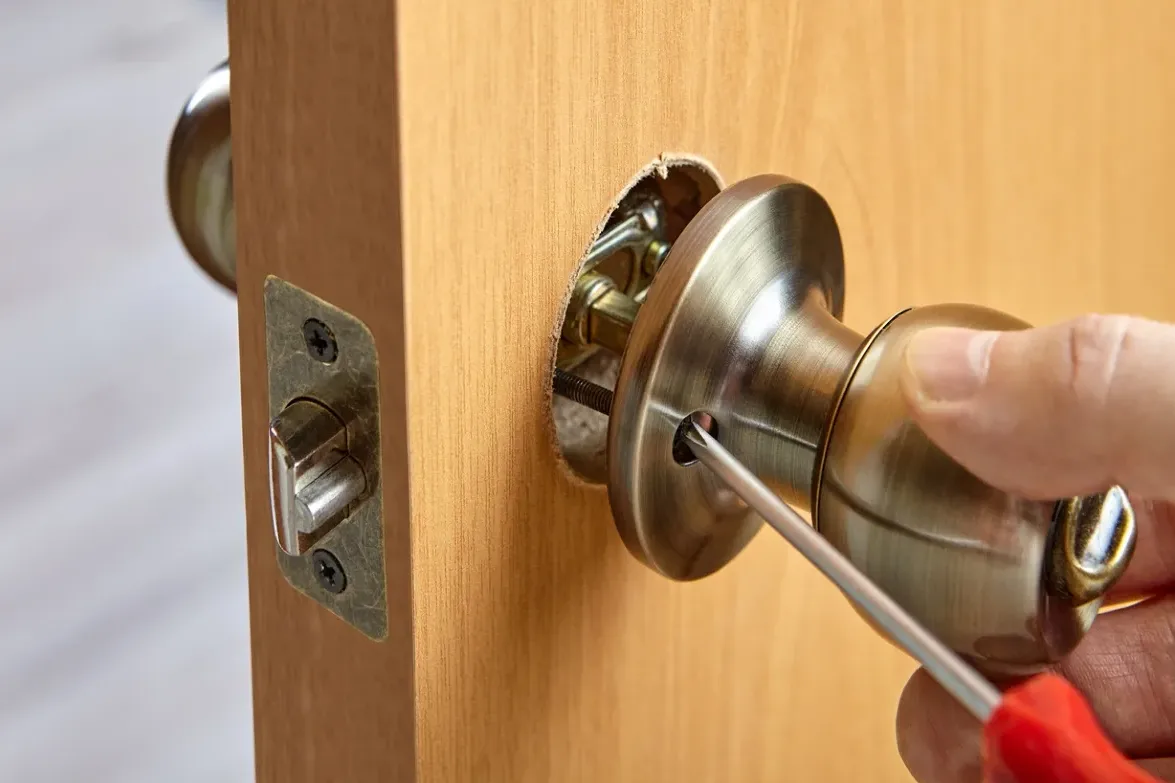
Replacement with coastal-grade
Install PVD or solid-brass hardware with matched exterior keying.
Maintenance plan
Leave maintenance schedule for lubrication and inspection.
Coastal lock maintenance tips
- Rinse exterior door hardware with fresh water monthly during winter snowbird season when the house is less used.
- Lubricate cylinders with dry silicone or graphite every 6 months minimum, quarterly if oceanfront.
- Never use WD-40 or penetrating oil on pin tumbler cylinders - it attracts salt particles and makes corrosion worse.
- Spec PVD or solid brass even if budget is tight. Zinc hardware replacement within 2 years costs more than premium up front.
- Inspect annually for finish pitting. Pitting is the first visible sign that the coating is failing.
- After a major storm or flood, inspect all coastal hardware immediately. Saltwater exposure accelerates corrosion dramatically.
Related services
Other Treasure Coast Locksmith services in this cluster.
Coastal corrosion-resistant lock FAQs
Common questions from Treasure Coast oceanfront homeowners about salt-air lock failure.
How much does coastal-grade hardware cost?
PVD-coated Grade 1 deadbolts run $225 to $345 installed. Solid-brass Grade 1 deadbolts run $285 to $425 installed. Marine-grade 316 stainless deadbolts run $345 to $525 installed.
Full-house coastal replacement (5-7 cylinders) typically runs $1,250 to $2,800 depending on finish level and brand.
How long does standard hardware last on the coast?
Oceanfront exposure: 18 to 30 months before visible degradation. Within 3 blocks of the beach: 2 to 4 years. Half a mile inland: 4 to 7 years.
More than 1 mile inland: standard hardware lasts similarly to non-coastal areas. Sea breeze carry means even inland homes see accelerated corrosion compared to central Florida inland.
Is PVD or solid brass better?
Both are excellent. PVD (physical vapor deposition) bonds a titanium nitride or similar compound to brass at the atomic level, creating a hard coating that resists salt extremely well. Solid brass is naturally salt-resistant without coating.
Solid brass is more expensive. PVD coated is slightly more scratch-resistant. Both deliver 5-10 year coastal life.
What brands offer PVD coastal finishes?
Schlage B660P in PVD Life Satin Brass is our most-installed coastal deadbolt. Baldwin Estate in solid polished brass is another favorite. Emtek offers PVD in multiple patinas.
Medeco Maxum comes in satin brass. All four are appropriate for Treasure Coast coastal installation.
Can you rekey coastal hardware to match my existing keys?
Yes. Coastal hardware uses standard pin tumbler cylinders internally (with corrosion-resistant finishes), so rekeying works the same as standard hardware. We can match your new coastal hardware to existing house key patterns at installation.
Do smart locks come in coastal finishes?
Yes but limited. Schlage Encode in PVD Life Satin Brass is the most common coastal smart lock. Yale Assure is available in polished brass.
Kwikset Halo Touch in some coastal finishes. August Smart Lock Pro doesn't affect finish since it retrofits over an existing deadbolt. For oceanfront use, Schlage Encode PVD is the safest bet.
Will my HOA approve PVD finish?
Most Treasure Coast HOAs that require bronze, satin nickel, or brass finishes accept PVD versions as equivalent. Some older associations specify exactly 'solid brass' which excludes PVD, so verify with your specific HOA before installation. We keep a running reference of association finish requirements.
How do I know when my locks are corroding?
First signs are visible finish pitting (small dark spots on the lock face), followed by rougher key operation and sticky deadbolt throw. Interior corrosion shows up as seized pin tumblers - the key stops turning despite looking fine externally. Any of these signs means it's time for assessment.
Can you repair a corroded lock or does it need replacement?
Depends on severity. Minor corrosion can be cleaned and the cylinder rebuilt - about $85-$145 per lock. Moderate corrosion with cylinder damage needs replacement at $225-$485 per lock depending on finish grade.
Severe corrosion with frozen mechanisms always needs replacement.
Should I replace all my locks at once?
For coastal homes, yes. If one exterior lock has corroded to the point of replacement, the others installed at the same time are typically at similar stages of degradation. Whole-house replacement also lets you match all exterior keys and finishes for a consistent look and simpler daily use.
Do marine-grade stainless locks look like commercial hardware?
Some do. Marine-grade stainless is common in commercial, so the available designs skew toward commercial aesthetic. We stock residential-style marine stainless from a few manufacturers.
For homeowners who prefer traditional residential look, PVD-coated brass is usually a better choice than marine stainless.
How often should I lubricate coastal locks?
Every 3 to 6 months for oceanfront, every 6 to 12 months for inland coastal. Use dry graphite or dry silicone - never oil or WD-40. Lubrication extends the life of even standard hardware by 50-100% and coastal hardware by 20-50%.
It's the single cheapest maintenance for expensive hardware.