Smart locks and deadbolts aren't rivals - the best smart locks ARE deadbolts with added electronics. Schlage Encode Plus and Yale Assure 2 are Grade 1 deadbolts with keypad, app control, and activity logs. Traditional deadbolts win on simplicity, no batteries, and no technology to hack.
- 20+Years on the Treasure Coast
- 5095-Star Google Reviews
- <30 minTypical Port St. Lucie Response
- $89-150Most Emergency Calls
The Misconception: Smart Locks vs Deadbolts
This comparison is slightly misleading because modern smart locks ARE deadbolts. The Schlage Encode Plus, Yale Assure 2, Kwikset Halo, and August WiFi Smart Lock all contain Grade 1 or Grade 2 deadbolt mechanisms. The "smart" part is electronic access (keypad, app, voice) added on top of a mechanical deadbolt.
The real comparison is: do you want a traditional deadbolt (key only, no electronics) or a smart deadbolt (key + keypad + app + voice)?
Traditional Deadbolt: The Case For Simplicity
A traditional deadbolt has one job: resist physical attack. It does that job extremely well with zero technology that can fail, be hacked, or need batteries.
Advantages
- Zero battery dependency. A traditional deadbolt works forever without batteries. In a Florida hurricane with no power for days, your deadbolt doesn't care.
- No technology to hack. Lock picking and bumping are theoretical concerns (solvable with high-security cylinders), but there's no Wi-Fi, no Bluetooth, no software vulnerability. The attack surface is purely mechanical.
- Lower cost. A quality Grade 1 traditional deadbolt (Schlage B660P) costs $195-$295 installed versus $295-$495 for a smart lock.
- Simplicity. Nothing to configure, no app to install, no firmware to update, no accounts to create. Turn the key, it locks. Turn the key, it opens.
- Decades of reliability. A Grade 1 deadbolt lasts 15-25+ years. Smart locks are too new for long-term reliability data, and battery-powered electronics tend to have shorter lifespans than pure mechanical devices.
Disadvantages
- Keys required. No key = locked out. The #1 emergency locksmith call is home lockout from forgotten or lost keys.
- No guest codes. House cleaner, dog walker, and Airbnb guests all need physical key copies. Key management becomes a security problem.
- No activity log. You don't know who entered or when. No notification when someone locks or unlocks.
- No remote control. Can't check lock status from work. Can't lock the door you forgot to lock after leaving.
Smart Lock: The Case For Convenience
Smart locks solve the problems traditional deadbolts can't: keyless entry, guest access, remote control, and visibility into who's coming and going.
Advantages
- Never locked out. Keypad code provides backup entry when keys are forgotten. One smart lock eliminates the most common reason people call emergency locksmiths.
- Guest codes. Temporary codes for house cleaners, contractors, dog walkers, and Airbnb guests. Delete the code when access is no longer needed. No physical keys to manage or collect.
- Activity logs. See who entered and when. Useful for parents tracking children, property managers monitoring contractors, and homeowners who travel.
- Remote lock/unlock. Lock the door from work if you forgot. Unlock for a delivery person. Check status from anywhere.
- Smart home integration. Works with Alexa, Google, Apple HomeKit for voice control and automation. "Alexa, lock the front door." Auto-lock after 30 seconds. Auto-lock when you leave (geofencing).
- Vacation rental ready. On the Treasure Coast, vacation rental properties (Jensen Beach, Hutchinson Island, Vero Beach) benefit enormously from keypad smart locks. Generate unique codes per guest, auto-expire after checkout, no key handoff needed.
Disadvantages
- Battery dependency. Smart locks run on AA or CR123 batteries lasting 6-12 months. When batteries die, the keypad stops working. Most smart locks have key backup, but if the key is also unavailable, you're locked out. Low-battery alerts help if you pay attention to them.
- Technology complexity. Wi-Fi pairing, app configuration, firmware updates, account management. Not for everyone. If you're uncomfortable with smartphone apps, a smart lock adds frustration rather than convenience.
- Hacking concerns. Smart locks have theoretical cybersecurity vulnerabilities (Bluetooth relay attacks, Wi-Fi exploits). Practical risk is low - burglars kick doors rather than hack locks - but the attack surface is larger than a traditional deadbolt.
- Higher cost. $295-$495 installed versus $195-$295 for traditional. Annual battery cost: $5-$15. May need replacement sooner than mechanical deadbolt.
- Potential for malfunction. Electronic components can fail. Motor jams, keypad unresponsive, app connectivity issues. Rare with quality products but possible.
Security Comparison: Are Smart Locks Safe?
For physical security, smart locks and traditional deadbolts are equivalent when they use the same grade deadbolt mechanism. A Schlage Encode Plus has the same Grade 1 deadbolt as a Schlage B660P. The keypad and electronics don't weaken the mechanical lock.
The security difference is in the electronic layer:
Traditional deadbolt attack surface: Lock picking (low practical risk with quality cylinders), lock bumping (solvable with Medeco/Mul-T-Lock), and physical attack (kick, pry - same for both).
Smart lock attack surface: All the above PLUS Bluetooth relay (theoretical but demonstrated in labs), Wi-Fi exploitation (firmware dependent), and code observation (someone watching you enter your PIN). Practical risk from electronic attacks is very low - no documented cases of residential burglary using smart lock hacking in the Treasure Coast.
Bottom line: Burglars don't hack locks. They kick doors, break windows, and enter through unlocked entries. The practical security difference between a smart lock and a traditional deadbolt is negligible.
The convenience difference is enormous.
The Best Answer: Both
For most Treasure Coast homeowners, the optimal setup is:
- Front door: Smart lock (Schlage Encode Plus or Yale Assure 2). This is where convenience matters most - keypad for family, guest codes for service people, remote control when away.
- Back door + garage-to-house: Traditional Grade 1 deadbolts (Schlage B660P). These doors are used less frequently and by family only. No need for keypad or app access.
This mixed approach costs $490-$790 for 3 doors (one smart + two traditional) versus $885-$1,485 for all smart locks. You get smart features where they matter most and save money on secondary doors.
Rekey all three to the same backup key so the smart lock's physical key opens every door. One keyring handles everything.
Smart Lock Buying Guide for the Treasure Coast
Schlage Encode Plus ($250-$350 retail, $295-$495 installed): The locksmith's recommendation. Grade 1 deadbolt, built-in Wi-Fi (no hub needed), Apple HomeKit + Google + Alexa, up to 100 codes, backup key. Schlage's commercial heritage means the mechanical lock is excellent.
Yale Assure 2 ($200-$300 retail, $295-$445 installed): Sleek design, touchscreen keypad, Apple HomeKit via module, strong smart home integration. Owned by Assa Abloy (major commercial lock company).
Kwikset Halo ($180-$250 retail, $245-$395 installed): Budget-friendly option with Wi-Fi built-in. SmartKey rekeying (DIY rekey without locksmith). Solid for cost-conscious buyers.
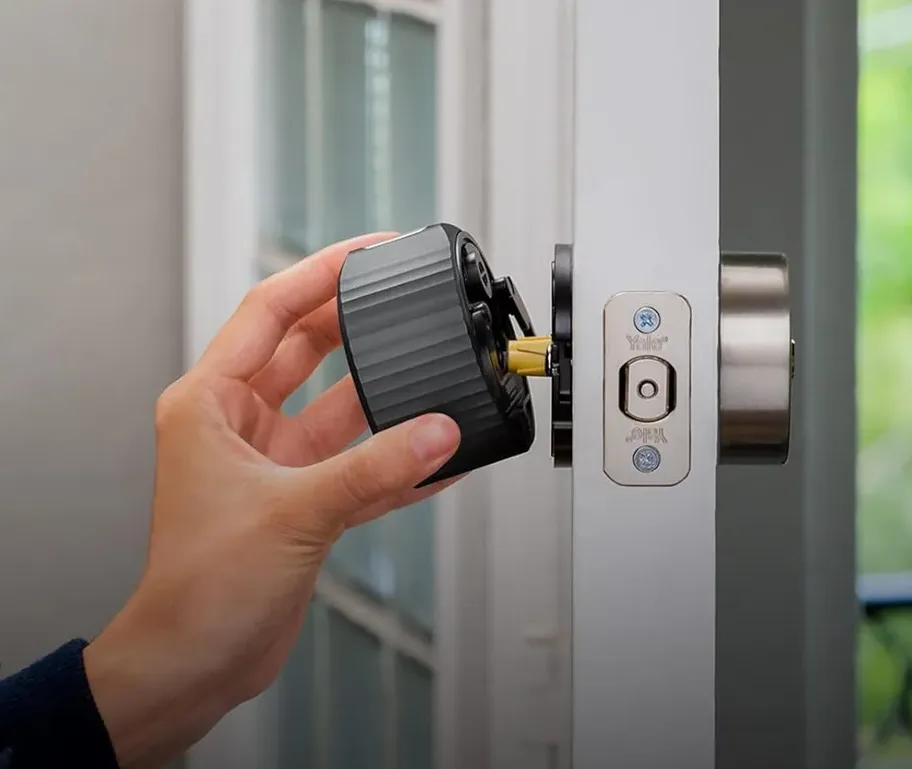
August WiFi Smart Lock ($200-$280 retail, $295-$445 installed): Retrofits over existing deadbolt from the inside. Keeps your existing exterior hardware appearance. Best for renters or homeowners who like their current exterior hardware.
Florida-Specific Considerations
Humidity. Florida humidity can affect smart lock electronics over time. Quality brands (Schlage, Yale) are designed for this but cheap no-name smart locks may corrode internally. Buy quality.
Salt air. Coastal Treasure Coast homes (Jensen Beach, Hutchinson Island, Vero Beach beachside, Fort Pierce North Beach) should choose smart locks with corrosion-resistant finishes. Schlage's PVD finishes handle coastal exposure better than chrome plating.
Hurricane power outage. During extended power outages, Wi-Fi goes down - smart lock loses remote connectivity. But the keypad and physical key still work (battery powered, no Wi-Fi needed for local operation). Smart locks remain functional during Florida hurricanes as long as batteries have charge.
Vacation rental market. The Treasure Coast vacation rental market (Nettles Island, Hutchinson Island condos, Vero Beach beachside) heavily favors smart locks. Keypad codes eliminate key management for remote properties. Auto-expiring guest codes add security between rentals.

Related Services