Treasure Coast Locksmith provides fire door inspection services in Port St. Lucie, Stuart, Fort Pierce, Vero Beach, Jensen Beach, and across the Treasure Coast. Call (772) 758-1322 for mobile service. Fire door inspection is required annually under NFPA 80 for labeled fire-rated doors in commercial and institutional buildings. Inspection covers door, frame, hardware, gasketing, clearance gaps, label verification, and operational testing. Treasure Coast Locksmith provides NFPA 80 inspection, deficiency documentation, and repair service for fire doors across Port St.
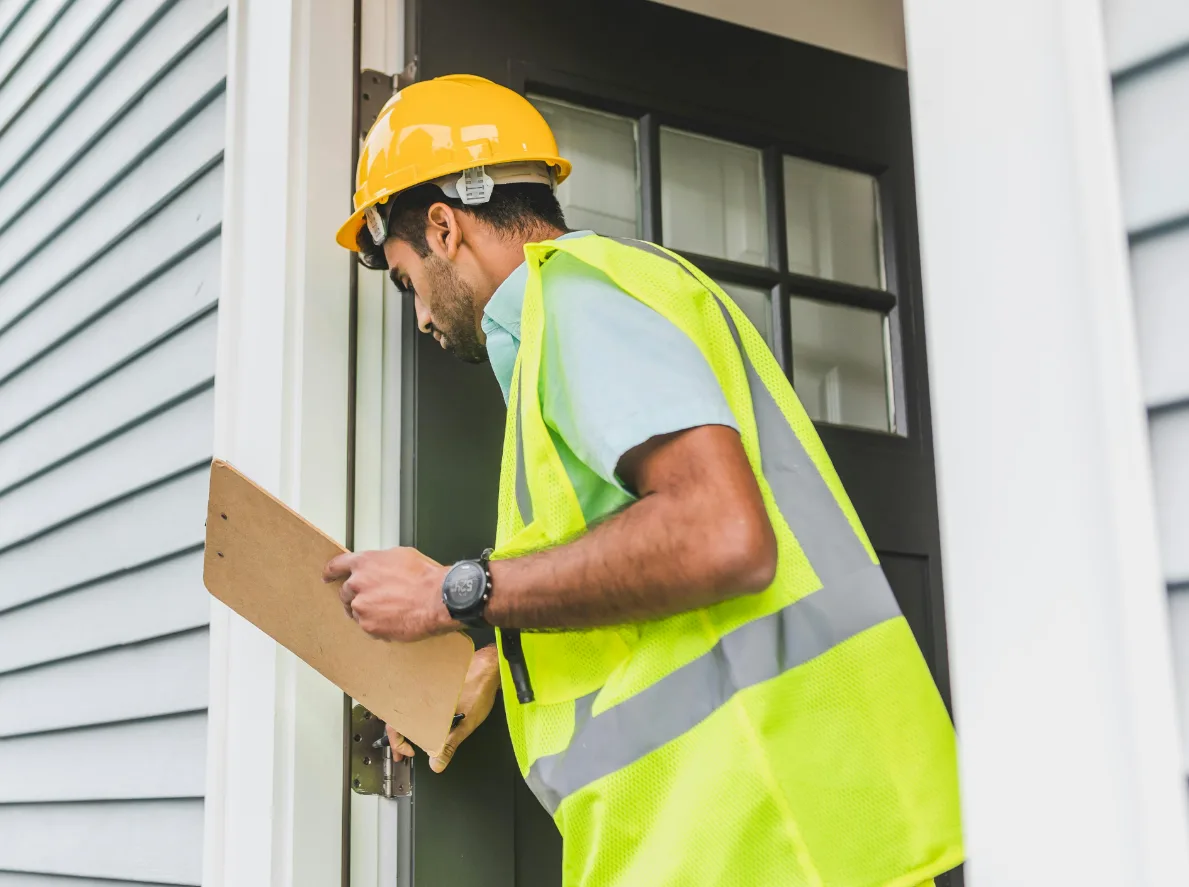
NFPA 80 requires annual inspection of all labeled fire-rated doors in commercial and institutional buildings. The inspection verifies that doors, frames, hardware, gasketing, and operational characteristics meet requirements for fire rating. Failed inspections mean deficiencies that must be corrected before the next fire marshal review.
The inspection is thorough. Every hardware component must be UL-listed for fire application. Clearance gaps around the door must be within specification.
Doors must self-close and latch under their own force. Labels must be legible and not painted over. Damaged or modified doors lose fire rating regardless of original certification.
Treasure Coast Locksmith provides NFPA 80 fire door inspection and repair service. We document deficiencies with photos and specifications, provide repair quotes, and complete corrections with UL-listed components. Inspection documentation suitable for fire marshal review and insurance records.
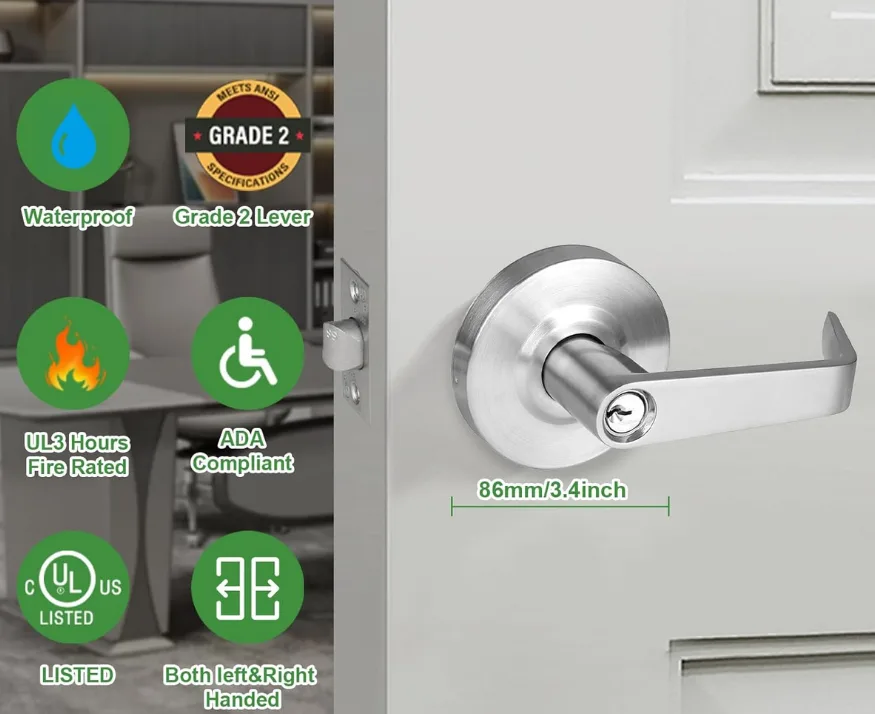
Fire door inspection specialty
- NFPA 80 compliance - current edition standards.
- Detailed deficiency reports - photos and specs.
- Hardware verification - UL listing confirmed.
- Clearance measurement - head, jamb, meeting edge.
- Label verification - legibility and originality.
- Operational testing - self-close, self-latch.
- Repair coordination - deficiencies corrected.
- Insurance documentation - audit-ready records.
Common fire door inspection scenarios
Real fire door situations.
Typical calls
- Port St. Lucie hospital with annual NFPA 80 inspection for 85 fire doors.
- Stuart medical plaza with tenant-requested inspection before occupancy.
- Vero Beach school with fire marshal-required inspection after deficiencies cited.
- Fort Pierce apartment complex with annual common-area fire door review.
- Jensen Beach assisted living with NFPA 101 + NFPA 80 compliance.
- Tradition office building with fire door inspection for insurance audit.
- Palm City church with social hall fire door inspection.
- Treasure Coast college dorm with annual residential corridor inspection.
NFPA 80 inspection scope and common deficiencies
NFPA 80 Standard for Fire Doors governs fire door inspection, installation, and maintenance. Annual inspection is required for all labeled fire-rated door assemblies. Inspection must be conducted by qualified person and documented.
Label Verification: Every fire door must have visible, legible UL or other approved label identifying fire rating (20 min, 45 min, 60 min, 90 min, 3 hr). Painted-over or missing labels create deficiency. Labels on replacement doors must match or exceed original rating.
Clearance Measurements: NFPA 80 specifies maximum clearances:
• Between top of door and frame head: 1/8" max
• Between door edge and jamb: 1/8" max
• Between meeting edge of pair doors: 1/8" max
• Between bottom of door and threshold: 3/4" max (varies by application)
Excessive clearances create fire passage paths and must be corrected.
Hardware Verification: Every hardware component must be UL-listed for fire application. Closers must be labeled fire-rated. Panic hardware must be fire-rated (most Von Duprin, Sargent models are).
Hinges must be ball-bearing for fire doors. Non-rated hardware on fire doors creates deficiency regardless of quality.
Operational Testing: Fire doors must self-close from any open position and self-latch without assistance. Hold-open devices must be integrated with fire alarm for automatic release. Doors that don't close fully or don't latch are non-compliant.
Gasket Inspection: Smoke gasketing, intumescent seals, and door sweeps must be present where required, continuous, and not damaged. Missing or damaged gasketing creates deficiency. Silicone-based gasketing is standard for modern fire doors.
Glazing Check: Fire-rated glazing (glass) must meet rating matching door. Damaged or non-rated glazing creates deficiency. Wire glass is acceptable for fire but not impact-rated.
Frame Inspection: Frame must be securely anchored, not racked, with intact fire-rated label. Damaged frames from forklift impact, settlement, or modification create deficiencies.
Common Deficiencies: Missing or painted-over labels, excessive clearance gaps, non-rated hardware, failed closers (don't self-close), hold-open devices without fire alarm integration, damaged gasketing, frame damage, and modifications (extra holes, cutouts) that weren't factory-done.
Documentation: Inspection report must document each door location, rating, deficiencies found, and repair recommendations. Reports are submitted to building owner/facility manager and available for fire marshal review. Typically one report per building or per inspection cycle.
Fire door inspection process
Schedule inspection
Call (772) 758-1322.
Schedule annual inspection based on prior date or renewal cycle.
Door-by-door review
Inspect each labeled fire door per NFPA 80 checklist.
Deficiency documentation
Photos, measurements, and written findings.
Repair and report
Correct deficiencies (with approval), deliver final inspection report.
Fire door compliance tips
- Schedule NFPA 80 inspection annually on consistent date.
- Document repairs as they happen, not just at inspection.
- Protect labels from paint and damage.
- Train staff not to prop fire doors open.
- Keep clearance gaps within NFPA 80 specs.
- Use only UL-listed hardware on fire doors.
Related services
Other Treasure Coast Locksmith services in this cluster.
Fire door inspection FAQs
Common questions from Treasure Coast facility managers and building owners.
How much does fire door inspection cost?
Small buildings (under 10 doors): $295-$595. Mid-size (10-50 doors): $495-$1,495. Large (50-200 doors): $1,495-$4,995.
Pricing based on door count, complexity, and required documentation depth. Free quote with building count.
How often is inspection required?
NFPA 80 requires annual inspection of all labeled fire-rated doors. Some jurisdictions require more frequent inspection for high-risk buildings (hospitals, nursing homes). Check with local fire marshal for specific requirements.
Who is required to have fire doors inspected?
Commercial and institutional buildings with labeled fire-rated door assemblies. Apartments, offices, schools, hospitals, hotels, and most commercial spaces with fire separation walls. Residential single-family exempted.
What happens if deficiencies are found?
Deficiencies must be corrected. We can correct most issues during or after inspection with UL-listed replacement parts. Documentation of correction is added to inspection record.
Major deficiencies may require follow-up inspection.
Do you provide inspection documentation?
Yes. Detailed inspection report with each door location, rating, deficiencies found, photos, measurements, and repair recommendations. Suitable for fire marshal review, insurance audits, and facility management records.
Can you do inspections after normal business hours?
Yes. After-hours and weekend inspections available to minimize occupancy disruption. Common for tenant buildings, hospitals, and schools where daytime inspection creates issues.
What if I don't know which doors are fire-rated?
We identify fire-rated doors as part of the inspection process. Labels tell the story - UL label identifies rating. Building plans and fire separation walls also indicate required fire doors.
Part of our normal service scope.
Do you repair deficiencies during inspection?
Minor deficiencies (adjustment, clearance corrections) often fixed during inspection. Major deficiencies (hardware replacement, frame repair) scheduled for follow-up visit with parts. Your choice on repair coordination.
What about hold-open devices?
Magnetic hold-open devices connected to fire alarm system are compliant. Wedges, chains, or other manual hold-opens are always non-compliant and must be removed. Fire alarm integration verified during inspection.
Can you handle multi-building facilities?
Yes. Hospitals, school campuses, apartment complexes, and multi-building facilities served with coordinated inspection schedule. Standard for large Treasure Coast facility operators.
Who qualifies as inspector?
NFPA 80 requires inspection by qualified person familiar with fire door requirements. Our technicians have experience with NFPA 80 and can perform inspections recognized by Treasure Coast fire marshals. Not an AHJ certification but accepted professional practice.
Do you work with fire marshal directly?
When needed. For complex installations, code interpretation questions, or violation resolution we coordinate with local fire marshal. Proactive approach resolves issues faster than reactive.