Treasure Coast Locksmith provides access control door hardware services in Port St. Lucie, Stuart, Fort Pierce, Vero Beach, Jensen Beach, and across the Treasure Coast. Call (772) 758-1322 for mobile service. Access control door hardware integrates electric locks, exit devices, strikes, maglocks, REX (request to exit), and DPS (door position switch) into a complete access-controlled door. Proper integration ensures security, code compliance, and reliable operation. Treasure Coast Locksmith integrates access control door hardware for commercial buildings needing coordinated access control installations.

Access control doors are more than a card reader on the wall. They're an integrated system of coordinated hardware: electrified lockset or exit device, electric strike or maglock, REX (request to exit) device for egress detection, DPS (door position switch) for door status monitoring, and wiring to the access control panel. Each component must work with the others for reliable operation.
Common integration work: electrify existing mechanical locks with EL (electric latch retraction) versions, install electric strikes on standard doors for card reader access, add REX and DPS to doors with maglocks, coordinate hardware with access panels, and troubleshoot existing installations that aren't working properly. Treasure Coast Locksmith integrates access control door hardware across commercial buildings in the tri-county.
We work with HID, Honeywell, Software House, Brivo, Openpath, and other commercial access control platforms. Proper integration includes code compliance (fire egress, life safety), hardware coordination, and documentation for troubleshooting.

Access hardware integration specialty
- Electrified lockset install - EL mortise and cylindrical.
- Electric strike integration - HES, Von Duprin 6000.
- Maglock installation - with egress integration.
- REX motion sensors - PIR and button.
- DPS installation - door position monitoring.
- Panel wiring - home runs to controller.
- Fail mode configuration - matching code requirements.
- Code compliance - NFPA 101 egress.
Common access hardware scenarios
Real access control integration situations.
Typical calls
- Port St. Lucie office with electrified lockset upgrade for access control.
- Stuart medical office with maglock install with PIR and REX.
- Vero Beach warehouse with electric strike for loading dock.
- Fort Pierce retail with comprehensive access control integration.
- Jensen Beach law firm with DPS retrofit for monitoring.
- Tradition tech company with electrified exit devices on pair doors.
- Palm City corporate campus with multi-door integration.
- Treasure Coast school with NFPA 101 compliant access control.
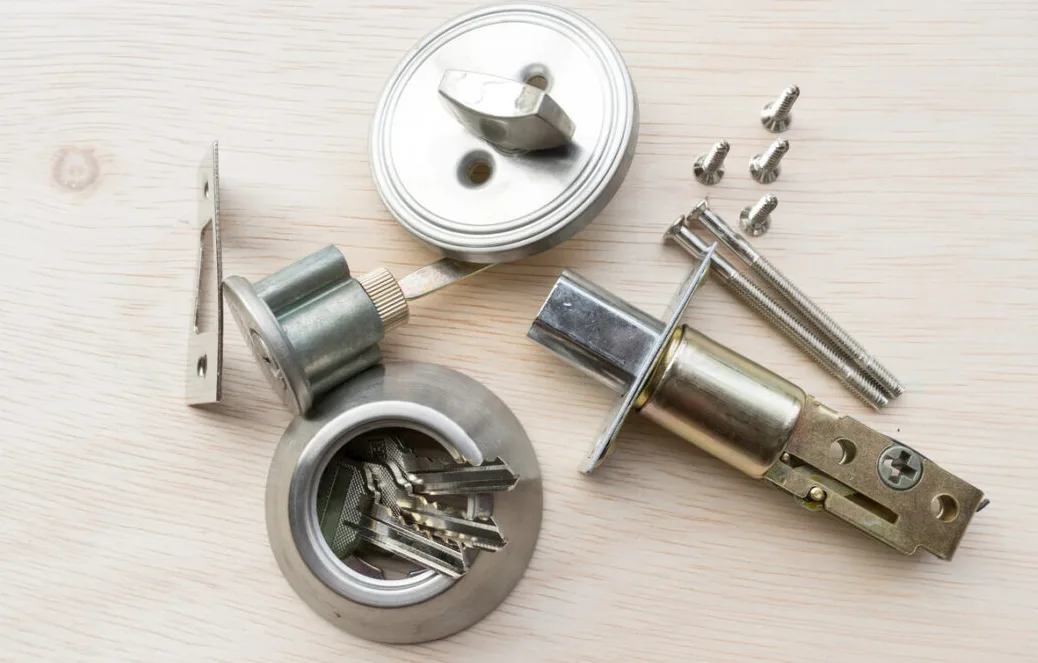
Access control hardware components and integration
Access control door hardware has several components that must work together. Understanding each component helps specify complete installations.
Electrified Locksets: Commercial mortise and cylindrical locks with electric components. Common options:
• EL (Electric Latch Retraction) - electric mechanism retracts the latch when signaled by access panel
• EO (Electric Outside) - lock unlocks from outside on signal, inside always free
• Fail-safe - unlocks on power loss
• Fail-secure - stays locked on power loss
Schlage L9080 EL, Sargent 8200 EL, Corbin Russwin ML2000 EL are common examples.
Electric Strikes: Replace standard strike plates with electric units that release on signal. Alternative to electrifying the lockset - keeps mechanical lockset but adds electric release. HES 1006, Von Duprin 6000, Folger Adam 310, Adams Rite 7140 are common.
Fail-safe or fail-secure configuration.
Magnetic Locks (Maglocks): Electromagnetic locks that hold doors shut with no mechanical mechanism. Always fail-safe - release when power is lost. Require separate egress mechanism (REX motion sensor, push button, fire alarm release) for code compliance.
600 lb and 1200 lb holding forces common.
Exit Devices (Electrified): Electric exit devices combine free egress (push bar works mechanically) with electric access control from the outside. Von Duprin 99 EL, Sargent 80 EL, Corbin Russwin ED5000 EL. Integrates panic hardware with access control.
REX (Request to Exit) Devices: Sensors or buttons that tell the access panel someone is leaving the door, preventing false alarm for door-forced-open. Types:
• PIR motion sensor - mounted above door, detects person approaching to exit
• Pushbutton - manually pressed to exit (less common now)
• Integrated REX - built into the lockset or exit device
Required for maglock doors for code compliance. Recommended for all access-controlled doors to prevent false alarms.
DPS (Door Position Switch): Sensor detecting whether the door is open or closed. Typically magnetic reed switch mounted on door and frame. Reports door status to access panel.
Enables held-open detection (door left open too long) and door-forced-open alerts (door opened without valid credential). Essential for any serious access control installation.
Door Contact Sensors: Alternative name for DPS, sometimes with different features. Essentially the same function.
Power Supplies: Access control requires DC power to locks, strikes, and maglocks. Panels have built-in power or external power supplies. Voltage typically 12 VDC or 24 VDC.
UPS backup for operation during power interruptions.
Wiring: Each door has multiple wires back to the access panel: reader (RS-485 or Wiegand), lock power (for strikes, maglocks, or electrified locks), REX input, DPS input, tamper monitoring. Typical 18 AWG to 22 AWG multiconductor cable in plenum rated (CMP) or riser rated (CMR) depending on building code.
Code Compliance: Fire egress is mandatory. Doors serving occupied spaces must allow immediate egress under panic conditions. Maglocks require REX for code compliance.
Fire alarm integration releases maglocks during fire events. Egress must be single-motion, reliable, and accessible. See NFPA 101 for life safety code.
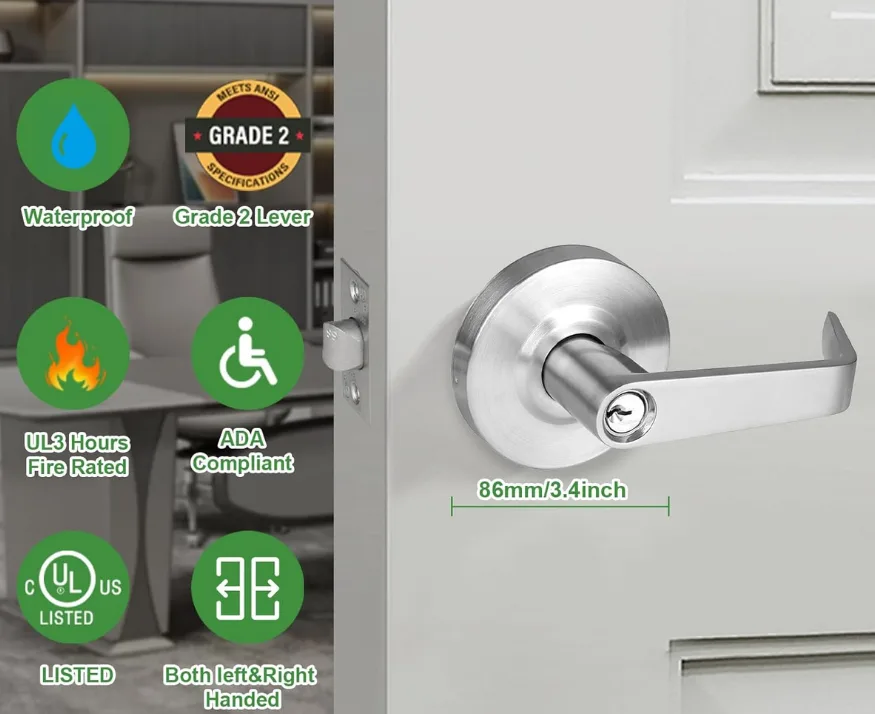
Access hardware integration process
System assessment
Call (772) 758-1322.
Evaluate doors and access control needs.
Hardware specification
Choose electrified locks, strikes, or maglocks per application.
Integration installation
Install door hardware, wire to panel, configure operation.
Commissioning
Test access events, egress, and fail modes with documentation.
Access hardware tips
- Verify fail mode matches code requirements.
- Include REX and DPS on all access-controlled doors.
- Use maglocks only with proper egress integration.
- Document wiring for future troubleshooting.
- Test fail modes before going live.
- Integrate with fire alarm system where required.
Related services
Other Treasure Coast Locksmith services in this cluster.
Access control door hardware FAQs
Common questions from Treasure Coast businesses implementing access control.
How much does access control hardware integration cost?
Single door with electric strike: $1,495-$2,995. Electrified lockset integration: $1,995-$3,995. Maglock with egress integration: $1,995-$3,995.
Multi-door projects: $5,000-$50,000+ depending on scope and existing infrastructure. Free site survey.
What's the difference between electric strike and electrified lock?
Electric strike replaces the strike plate, adding electric release to existing mechanical lock. Electrified lock has electric components inside the lockset itself. Strike is simpler and cheaper; electrified lock is more integrated and sometimes required for specific applications like mortise locks.
Do you install electrified exit devices?
Yes. Von Duprin EL, Sargent 80 EL, Corbin Russwin EL exit devices with electric latch retraction. Panic hardware plus access control integration.
Free egress from inside, access control on outside. Common for assembly occupancy buildings with access control.
What is REX?
Request to Exit - a sensor or button that tells the access panel someone is leaving the door through normal egress. Prevents false alarm for door-forced-open when someone exits properly. Required for maglock doors to allow code-compliant egress.
Recommended for all access-controlled doors.
What about DPS?
Door Position Switch - detects whether the door is open or closed. Magnetic reed switch mounted on door and frame. Reports to access panel for held-open detection and door-forced-open alerts.
Essential for monitoring access-controlled doors.
Can you electrify existing locks?
Often yes. Existing commercial locksets can sometimes be upgraded with electric kits without replacing the full lock. Alternatively, install electric strikes that work with existing locks.
Evaluation during site visit determines best approach.
What about fail-safe vs fail-secure?
Fail-safe unlocks on power loss (code required for most egress doors). Fail-secure stays locked on power loss (high-security with backup power). Most access-controlled doors use fail-safe for life safety.
Select based on application and code requirements.
Do you integrate with fire alarm?
Yes. Fire alarm integration releases maglocks and fail-safe locks during fire events. Code-required for most maglock installations.
Coordinated with fire alarm contractor when needed for specific panel connections.
Can you handle maglock egress?
Yes. Maglock doors require PIR motion sensor for free egress, push-to-exit button backup, and fire alarm release. All components wired to access panel with proper fail modes.
Common installation approach for maglock applications.
What panels do you work with?
HID, Honeywell, Software House C-CURE, Lenel OnGuard, Brivo, Openpath, Kisi, Genea, and other major commercial access control platforms. Compatible with most hardware. Tell us the panel brand during scheduling.
Can you troubleshoot existing access control?
Yes. Access control troubleshooting common service call when doors aren't working properly. REX failures, DPS issues, lock power problems, wiring faults.
Diagnosis and repair for operational issues.
Do you coordinate with IT for networking?
Yes for IP-based access control. Network drops, IP addresses, VLAN configuration, and firewall rules coordinated with customer IT staff. Different from traditional analog access control - requires IT involvement for modern systems.