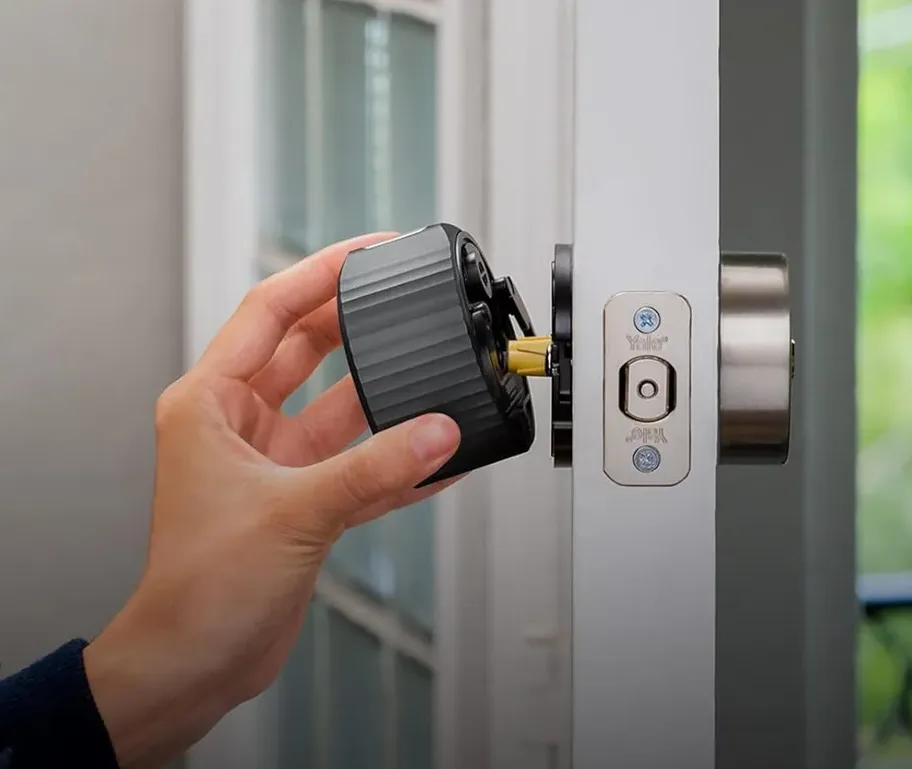
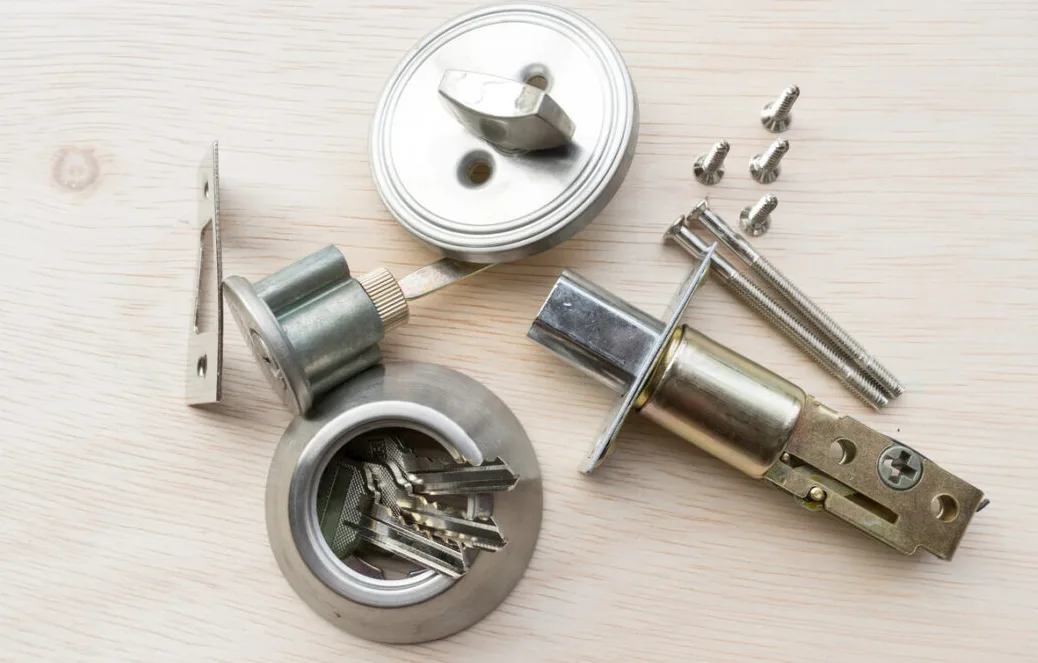
Main door lock types: Deadbolts (most important for exterior security, Grade 1 recommended), Knob locks (basic but shouldn't be sole exterior lock), Lever handles (ADA-compliant, commercial standard), Mortise locks (strongest design, common in commercial), Smart locks (deadbolt + electronics for keypad/app access), Padlocks (portable), and Cam locks (cabinets/mailboxes).
- 20+Years on the Treasure Coast
- 5095-Star Google Reviews
- <30 minTypical Port St. Lucie Response
- $89-150Most Emergency Calls
Why Lock Type Matters
Not all locks are created equal - and using the wrong type in the wrong place creates security gaps. A knob lock on an exterior door provides almost no resistance to forced entry. A Grade 3 deadbolt on a commercial door wears out in a fraction of the time a Grade 1 would last.
A padlock on an interior door is weird and impractical.
Understanding lock types helps you make informed decisions when buying, upgrading, or replacing locks. Each type has specific strengths, limitations, and appropriate applications.
Deadbolts
The deadbolt is the most important lock on any exterior door. Unlike spring-loaded latches (which can be shimmed or credit-carded), a deadbolt extends a solid bolt into the door frame that can only be retracted by turning the key or thumb turn. No spring mechanism - the bolt stays extended until manually retracted.
Single Cylinder Deadbolt
Key on the outside, thumb turn on the inside. The standard for residential exterior doors. You lock and unlock from outside with a key; from inside, you turn the thumb turn.
Single cylinder is the most common and most recommended deadbolt type for homes.
Pros: convenient egress (no key needed from inside), meets fire egress requirements, easy to use. Cons: if someone breaks glass near the lock, they can reach in and turn the thumb turn.
Double Cylinder Deadbolt
Key required on both sides - outside AND inside. Used on doors with glass panels where the thumb-turn vulnerability is a concern (someone could break the glass and reach in to unlock a single cylinder).
Pros: eliminates reach-through attack. Cons: major fire egress concern - if you can't find the key during an emergency, you're trapped. Many building codes restrict or prohibit double cylinder deadbolts for this reason.
Use with extreme caution and always keep the inside key accessible.
Grades
Grade 1: Commercial quality. 250,000+ operational cycles. 1-inch minimum bolt throw.
Hardened bolt insert. Examples: Schlage B660P, Medeco Maxum, Mul-T-Lock Hercular. Recommended for all exterior doors where security matters.
Grade 2: Light commercial / heavy residential. 400,000 cycles. 1-inch bolt throw on most models.
Examples: Schlage B60N, Kwikset 980. Acceptable for most residential applications.
Grade 3: Residential minimum. 150,000 cycles. Often 5/8-inch bolt throw (shorter than ideal).
Examples: Defiant, basic Kwikset. This is what builders install. Upgrade when budget allows.
Knob Locks
The traditional round doorknob with built-in latch. Common on interior doors and (unfortunately) used as the primary exterior lock on many homes. The latch is spring-loaded - it engages automatically when the door closes.
The problem: Knob locks provide minimal security on exterior doors. The spring latch can be shimmed (credit card trick), the knob can be wrenched off with pliers or a pipe wrench (the locking mechanism is in the knob, which is exposed outside), and the latch throw is short.
The rule: Never use a knob lock as the sole exterior lock. Always pair with a deadbolt. On interior doors (bedrooms, bathrooms), knob locks are fine - the privacy function (push-button or turn-button) provides adequate interior separation without security expectations.
Lever Handle Locks
Lever handles operate by pushing down rather than gripping and turning. Required by ADA on accessible routes in commercial and public buildings because they can be operated without grasping or twisting (people with arthritis, limited hand strength, or disabilities can push down with a forearm or palm).
Available in the same functions as knob locks: passage (no lock), privacy (push-button), entry (keyed), storeroom (always locked outside, free inside), and classroom. Commercial lever handles are Grade 1 or 2 with much higher cycle ratings than residential knobs.
Commercial standard: Schlage ND series, Sargent 11 Line, Corbin Russwin CL3300, Best 8K/9K - all lever handle commercial locks with Grade 1 certification.
Mortise Locks
The strongest commercial lock design. The lock body fits into a rectangular pocket (mortise) cut into the edge of the door. Mortise locks are larger and more complex than cylindrical locks, housing both the latch and deadbolt mechanism in a single heavy-duty body.
Why they're stronger: More metal engaging the door structure. Larger internal components that resist wear. Combined latch and deadbolt in one mechanism.
The mortise pocket distributes forces across more door material than the two round holes of a cylindrical lock.
Common commercial brands: Schlage L-series (most specified in North America), Corbin Russwin ML2000, Sargent 8200, Yale 8800, Best 45H.
Cost: $300-$900 for the lock alone (more than cylindrical), plus more complex installation requiring deeper door preparation. The premium is justified for high-traffic and high-security applications.
Where you'll find them: Hotels, hospitals, office buildings, schools, and any commercial building specified by an architect. The Schlage L-series on Treasure Coast hotel room doors, office suite entries, and hospital corridors - you interact with mortise locks constantly in commercial spaces.
Smart Locks
Smart locks add electronic access (keypad, app, biometric) to a traditional deadbolt mechanism. Modern smart locks from reputable brands contain genuine Grade 1 or Grade 2 deadbolts - the "smart" part is electronic access layered on top of mechanical security.
Types:
- Keypad smart locks: Enter a code on a touchscreen or button pad. Schlage Encode, Yale Assure, Kwikset Halo.
- App-controlled: Lock/unlock from smartphone app. Remote access when away. Activity logs.
- Biometric: Fingerprint reader. Kwikset Halo Touch, some Lockly models.
- Retrofit (interior-only): August WiFi Smart Lock - mounts over existing deadbolt from inside, keeping exterior hardware unchanged.
Battery-powered: All smart locks run on batteries (AA or CR123 typically). 6-12 month battery life. Physical key backup for when batteries die.
See our Smart Lock vs Deadbolt and Smart Lock Buyer's Guide for detailed comparison.
Cylindrical Locks (Bored Locks)
The most common commercial lock installation method. The door is bored with a large hole through the face (2-1/8 inch cross-bore) and a smaller hole through the edge (1-inch edge-bore). The lock installs through these two holes.
Cylindrical locks are simpler and cheaper to install than mortise but less strong. They're the standard for most commercial applications where mortise isn't specifically required. Lever handles on cylindrical lock bodies are the most common commercial lock you encounter daily.
Padlocks
Portable locks using a shackle (the U-shaped bar) that passes through a hasp, chain, or other fastening point. Not permanently installed - can be moved between locations.
Standard padlocks: Brass body, hardened steel shackle. Various sizes and security levels.
Shrouded shackle: Metal housing around the shackle prevents bolt cutter access. Significantly harder to cut than standard padlocks.
Disc padlocks: Circular body with minimal exposed shackle. Very difficult to cut. Common for storage units and high-security outdoor applications.
High-security padlocks: Abloy, ABUS, American Lock with pick-resistant and drill-resistant cylinders. For critical infrastructure, marina, and commercial outdoor applications on the Treasure Coast.
Cam Locks
Small cylindrical locks used in cabinets, file cabinets, mailboxes, vending machines, and electrical panels. The key rotates a flat metal piece (cam) that latches into the receiving hardware. Not for doors - for compartments and access panels.
Electronic/Electrified Locks
Commercial locks with electric operation for access control integration. Electric strikes (release the latch electronically), magnetic locks (maglocks - electromagnetic holding force), and electrified locksets (standard lock with electric latch retraction). Used in commercial buildings with card reader and access control systems.
Lock Grades Explained
The BHMA (Builders Hardware Manufacturers Association) grades commercial and residential lock hardware:
| Grade | Cycle Rating | Application | Examples |
|---|---|---|---|
| Grade 1 | 1,000,000+ | Commercial, high-traffic | Schlage B660P, ND, L-series |
| Grade 2 | 800,000 | Light commercial, heavy residential | Schlage B60N, Kwikset 980 |
| Grade 3 | 200,000 | Residential minimum | Defiant, basic Kwikset |
The takeaway: Grade 1 locks last 5x longer than Grade 3 under the same conditions. For a door that opens 100 times a day, Grade 1 lasts 27+ years while Grade 3 lasts about 5. The cost premium for Grade 1 ($50-$150 more per lock) is recovered many times over in longevity and reduced replacement frequency.
Which Lock Type for Which Application?
- Exterior entry doors: Deadbolt (Grade 1 or 2) + lever or knob handle set. Never knob lock alone.
- Interior bedroom doors: Privacy function knob or lever (push-button lock). No key needed.
- Interior bathroom doors: Privacy function with occupancy indicator. Emergency unlock from outside.
- Commercial offices: Lever handle cylindrical or mortise lock. Grade 1. Storeroom function on storage. Entry or office function on individual offices.
- Commercial exits: Panic bar (exit device) where occupancy exceeds 50 persons.
- Garages and sheds: Padlock on hasp. Deadbolt on walk-through doors.
- Sliding glass doors: Auxiliary lock (Charlie bar, foot lock) in addition to built-in latch.
- Front door (want convenience): Smart lock with keypad + deadbolt mechanism.
Treasure Coast Lock Selection
For Treasure Coast homes in Port St. Lucie, Stuart, Vero Beach, Fort Pierce, Jensen Beach, and coastal communities: choose PVD-coated or solid brass finishes on exterior locks to resist salt air. Grade 1 deadbolt on the front door minimum.
Smart lock for keypad convenience if desired. Always pair with 3-inch screws in the strike plate for kick resistance.
For Treasure Coast businesses: Grade 1 commercial hardware (Schlage, Sargent, Corbin Russwin). Panic bars on assembly occupancy exits. Access control for employee management.
Master key systems for multi-door buildings.

Related Services