Treasure Coast Locksmith provides keyless entry systems services in Port St. Lucie, Stuart, Fort Pierce, Vero Beach, Jensen Beach, and across the Treasure Coast. Call (772) 758-1322 for mobile service. Keyless entry systems replace physical keys with electronic credentials - keypads, cards, fobs, mobile phones, or biometrics. Treasure Coast Locksmith installs keyless entry for offices, retail, medical, and any commercial application. $1,500-$12,000+ depending on door count and technology.
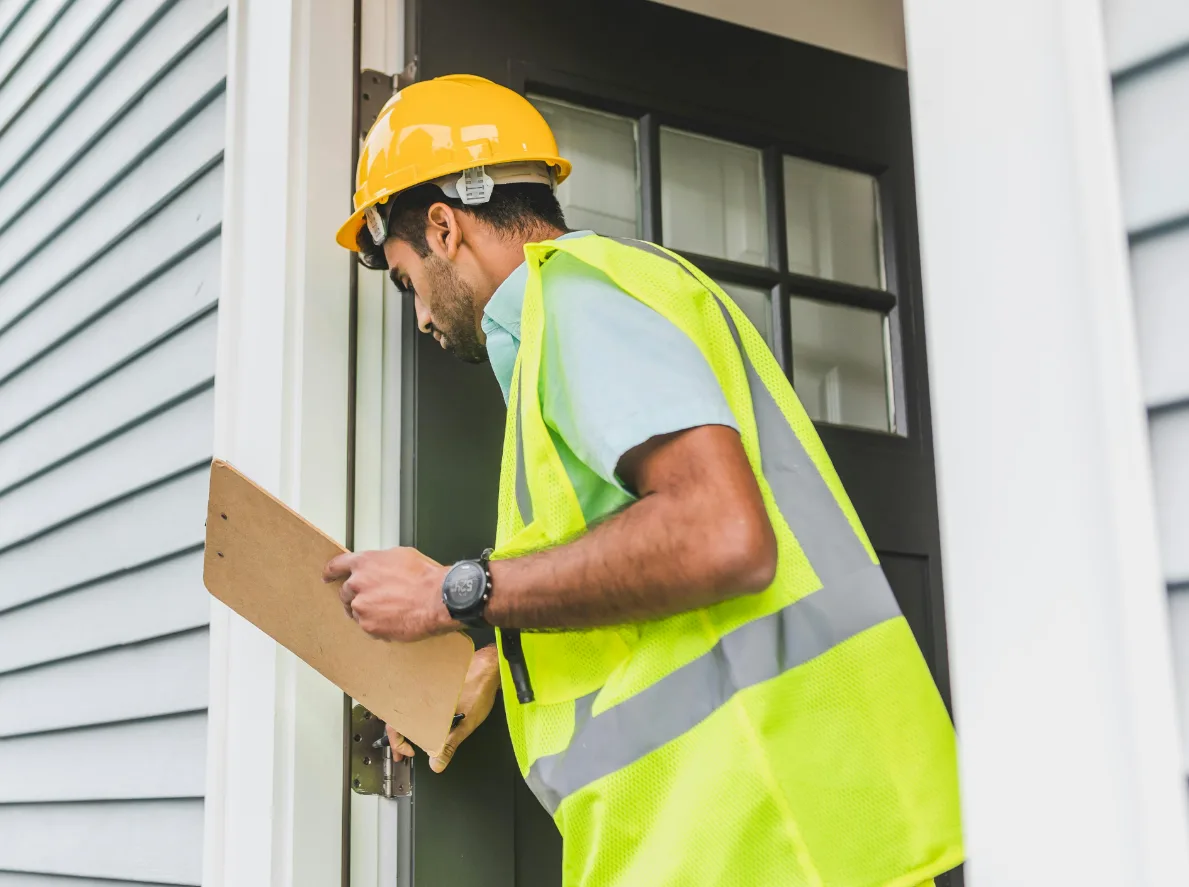
Keyless entry is a broad category covering any access control technology that doesn't use mechanical keys. This includes simple keypad locks (single door, no network, code-based access), card reader systems (cards or fobs with centralized management), mobile credential systems (smartphones as access cards), biometric systems (fingerprint, facial, hand), and hybrid combinations.
Each technology has different price points, capabilities, and use cases. Simple keypad locks work great for single-door applications ($195-$395 per lock). Multi-door card reader systems serve small-to-medium businesses ($3,000-$15,000 per site).
Enterprise access control with mobile credentials serves large operations ($25,000-$150,000+).
Treasure Coast Locksmith designs and installs keyless entry at every scale. We recommend the right technology for your specific needs and budget, avoiding both under-spec (inadequate for your needs) and over-spec (expensive and complex for what you actually use).
Keyless entry advantages
- No physical keys - no loss, no copying, no key control issues.
- Instant user management - add or revoke access in seconds.
- Schedule-based access - different times for different users.
- Activity logging - audit trail for every entry.
- Multiple credential types - code, card, fob, phone, biometric.
- Integration ready - alarms, cameras, visitor management.
- Scalable - from single door to multi-site enterprise.
- Future-proof - upgrade credential types without replacing hardware.
When keyless entry makes sense
Situations where keyless beats mechanical keys.
Typical keyless entry drivers
- Small office tired of rekeying after every employee turnover. Keyless eliminates the problem.
- Retail store with after-hours cleaner access and no always-present staff.
- Medical office with HIPAA audit trail requirements for protected areas.
- Multi-tenant building with individual tenant access management.
- Vacation rental owner with remote property needing guest code management.
- Fitness center with 24/7 member access and no staff outside business hours.
- Warehouse operation with different access zones for different worker roles.
- Professional building with visitor management and temporary access needs.
Keyless entry technology options
Simple keypad locks are the entry-level keyless option. Kaba, Schlage, Kwikset, and Yale all make commercial keypad deadbolts that install on a single door without wiring or networking. Users enter a code to unlock.
Administration happens at the lock itself or via a simple app. Cost: $195-$395 per lock installed.
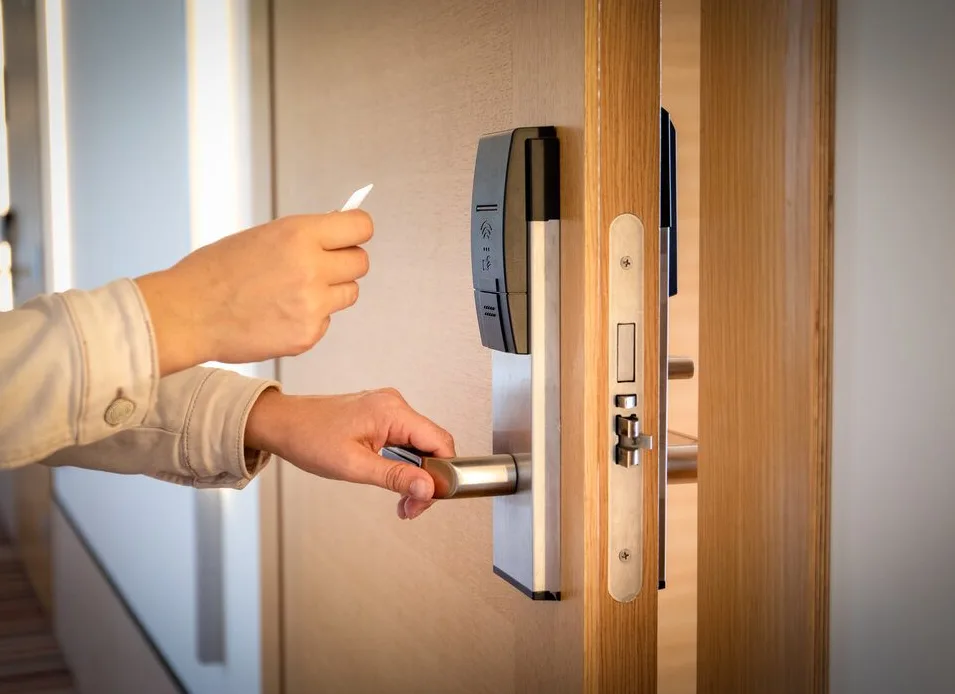
Networked card reader systems add centralized management. A card reader at each door communicates with a central controller (on-premise or cloud-based). Administrators add/remove users via a dashboard.
Employees carry cards or fobs. Cost: $3,000-$15,000 for a small business (5-10 doors).
Mobile credential systems replace cards with smartphones. Users install an app on their phone that sends credentials to readers via Bluetooth or NFC. Management is typically cloud-based with multi-site capability.
Cost: $4,500-$18,000 for small business (5-10 doors) - similar to cards plus minor smartphone setup cost.
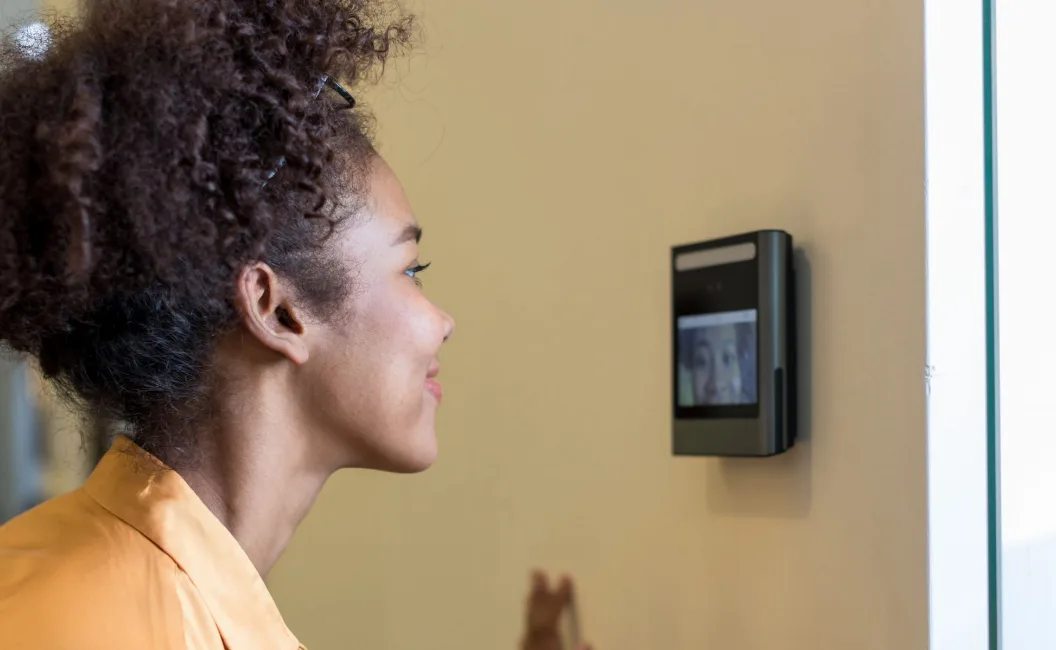
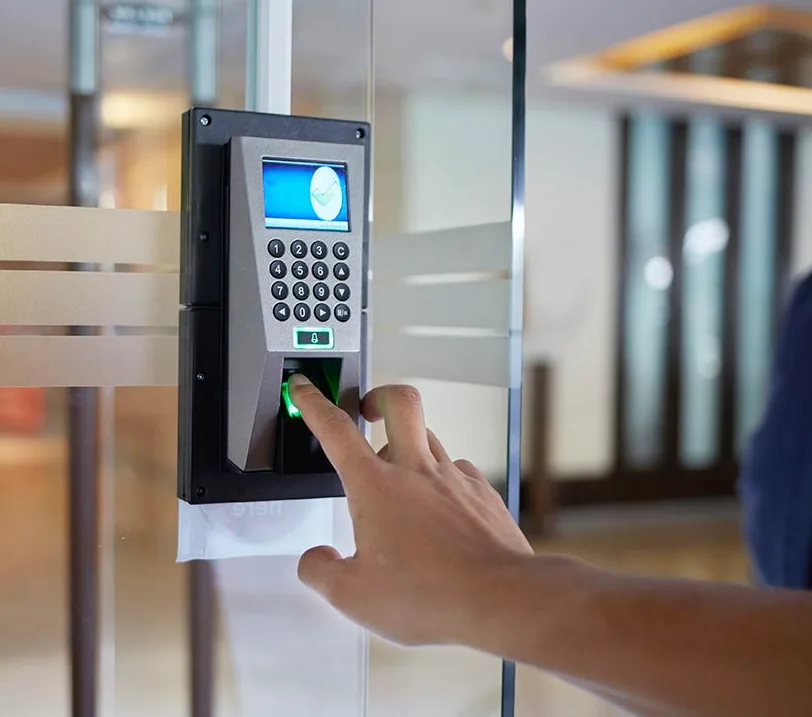
Biometric systems eliminate credentials entirely. Fingerprint, facial recognition, or hand geometry readers identify users by physical characteristics. Best for high-security applications where credential sharing is a concern.
Cost: $5,500-$25,000 for small business - higher due to specialty hardware.
Hybrid systems combine multiple credentials - users can access doors via card, phone, or keypad code depending on what's convenient. Most modern commercial installations are hybrid by default because it provides flexibility.
How keyless entry installation works
Assessment call
Call (772) 758-1322 to discuss your facility, user count, and security needs.
System design
We recommend technology type, reader placement, and management platform.
Installation
Install hardware, wire controllers, configure management.
Training and handoff
Train your admin, provision initial users, deliver documentation.
Keyless entry tips
- Start with current needs plus 50% growth - don't over-spec initially.
- Document your admin credentials securely - losing admin access is a major problem.
- Plan for credential turnover - how will you handle lost cards or stolen phones?
- For high-security areas, combine credential types (card + code + biometric).
- Test your system monthly - verify readers and credential sync.
- Keep backup mechanical keys for emergency access during system failures.
Related services
Other Treasure Coast Locksmith services in this cluster.
Keyless entry FAQs
Common questions about commercial keyless entry systems.
How much does keyless entry cost?
Single-door keypad lock: $195-$395. Small business card reader (5-10 doors): $3,000-$15,000. Mid-size enterprise (20-50 doors): $15,000-$65,000.
Enterprise (100+ doors): $75,000-$300,000+. Ongoing subscription for cloud systems: $5-$25 per lock per month.
What's the difference between keyless entry and access control?
Mostly terminology. Access control is the broader category including management software. Keyless entry emphasizes the user experience (no keys).
Most modern systems are both - they provide keyless entry AND access control management.
Can we use employee phones as keys?
Yes. Mobile credential systems (Brivo, Kisi, Openpath, HID Mobile) use smartphones as access cards. Employees install an app, administrators provision credentials.
Works with iPhone and Android.
Do we need internet for keyless entry to work?
Depends on the system. On-premise systems work normally during internet outages. Cloud systems continue to work for existing users during outages but can't add/remove users until internet returns.
Can keyless entry replace our mechanical keys entirely?
Yes, but keep backup mechanical keys for emergency access. Some electronic failures happen at inconvenient times. Best practice is electronic for daily use, mechanical backup for emergencies.
Are keyless entry systems HIPAA compliant?
Can be. HIPAA requires access logging and authorization controls that modern access control provides. We configure systems to meet HIPAA technical safeguards.
Common for medical offices.
Can keyless entry integrate with our alarm?
Yes. Most commercial access control integrates with commercial alarm systems. When alarm is armed, doors lock.
When disarmed, authorized users get access. Integration varies by alarm brand.
Do we need special wiring for keyless entry?
Depends. Cloud-based systems sometimes use Wi-Fi or cellular, minimizing wiring. Traditional wired systems run low-voltage cable (18-gauge or 22-gauge) from readers to controllers.
We plan wiring during site assessment.
Can we add more doors later?
Yes. Scalable systems allow adding doors over time. Cloud-based systems scale particularly well - just add readers and wire to the existing controller.
On-premise may require license upgrades.
How secure is keyless entry compared to mechanical keys?
Generally more secure. Electronic credentials can be revoked instantly (mechanical keys require rekey). Audit trails prevent unauthorized access.
Credential sharing is harder than key copying. For high-security, biometric is most secure.
Do you service existing keyless entry systems?
Yes. Service work includes adding users, troubleshooting failed readers, replacing hardware, and system upgrades. Service agreements available for ongoing maintenance.
How long does installation take?
Single-door keypad: 30-60 minutes. Small business (5-10 doors): 1-3 days depending on wiring complexity. Enterprise: 1-4 weeks for initial installation plus configuration and testing.