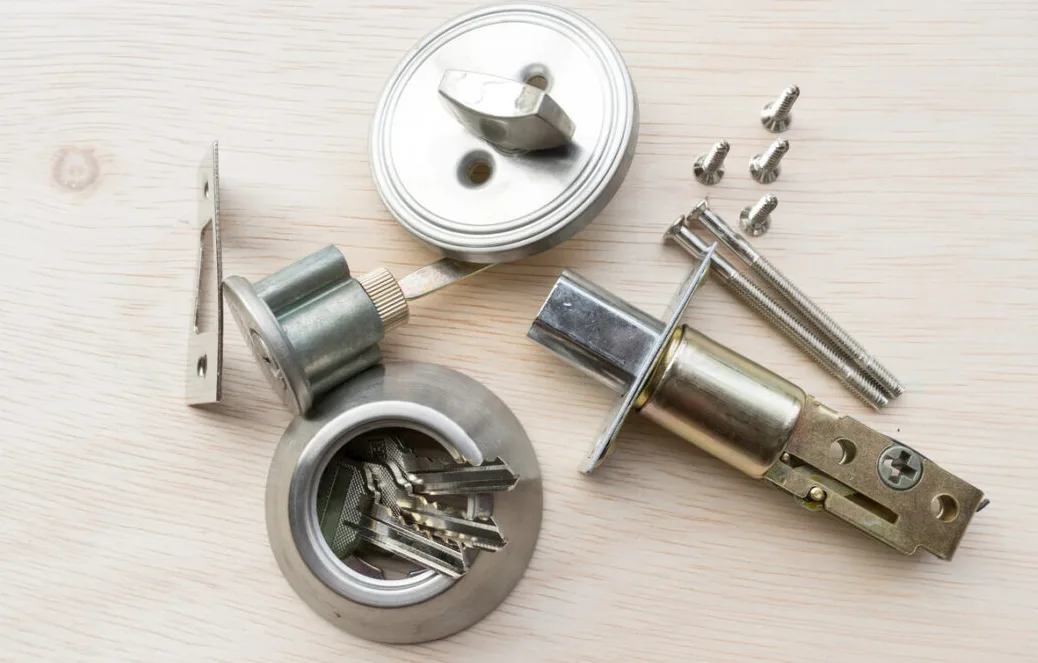
NFPA 101 (the Life Safety Code) is the building code standard that governs how people get out of buildings safely during fires and emergencies.
- 20+Years on the Treasure Coast
- 5095-Star Google Reviews
- <30 minTypical Port St. Lucie Response
- $89-150Most Emergency Calls

NFPA 101 in Plain English
The National Fire Protection Association (NFPA) publishes NFPA 101, officially titled the "Life Safety Code." It's been continuously updated since 1927 and is adopted (in whole or with amendments) by nearly every jurisdiction in the United States, including Florida.
In plain terms: NFPA 101 specifies how buildings must be designed and maintained so people can get out safely during a fire or emergency. It covers exit paths, door hardware, fire barriers, emergency lighting, exit signs, and the operational requirements for building owners.
Florida adopts NFPA 101 through the Florida Fire Prevention Code (administered by the State Fire Marshal). Your local fire marshal - in St. Lucie County, Martin County, or Indian River County - enforces these requirements during routine inspections and complaint-driven investigations.
Who Needs to Know This?
Every commercial building owner and tenant on the Treasure Coast. Specifically:
- Retail and restaurant owners: Assembly occupancy rules apply when occupant load exceeds 50 - which includes most restaurants and retail spaces larger than 1,500 sq ft.
- Office building owners/managers: Business occupancy requires maintained egress paths, fire door compliance, and emergency lighting.
- Medical and dental practices: Healthcare occupancy has the strictest NFPA 101 requirements - plus HIPAA physical security overlaps.
- Property managers: You're responsible for common-area compliance. Fire doors in corridors, stairwells, and parking structures are your obligation.
- Churches and community centers: Assembly occupancy with high-density events triggers panic hardware and egress requirements.
- Schools and daycare centers: Educational occupancy has specific hardware and egress requirements designed for children.
The key concept: NFPA 101 requirements are based on occupancy classification (how the space is used) and occupant load (how many people can be in the space). The same building can have different requirements if it changes from office use to restaurant use - the occupancy classification changes, and different NFPA 101 provisions apply.
The Five Requirements That Affect Your Door Hardware
1. Panic Hardware on Exit Doors (Assembly Occupancy, 50+ Occupants)
NFPA 101 Section 7.2.1.7 requires panic hardware (push bars) on exit doors in assembly and educational occupancies when the occupant load exceeds 50. This is the most commonly violated requirement on the Treasure Coast because many business owners don't realize their space qualifies as "assembly" occupancy.
What counts as assembly? Any space used for gathering 50+ people: restaurants, bars, event venues, churches, gyms, theaters, and many retail spaces. The occupant load is calculated by square footage (typically 15 sq ft per person for dining, 7 sq ft for standing), not by how many people you actually serve.
What qualifies as panic hardware? A device that releases the latch when pressure is applied to a horizontal bar spanning at least half the door width. The person exiting needs no special knowledge or action - push the bar, the door opens. Von Duprin, Sargent 80 Series, and Yale 7000 series are the most common brands installed on the Treasure Coast.
Panic hardware must be listed (tested by UL or equivalent) and compatible with the fire rating of the door. You can't put a non-rated panic device on a fire door - the device must carry its own fire rating.
2. Fire Doors Must Self-Close and Positively Latch
Every fire-rated door assembly (doors in fire-rated walls, stairwell doors, corridor doors) must:
- Self-close: A functioning door closer that returns the door to the closed position from any open angle. No propping open with doorstops, wedges, boxes, or trash cans. This is the single most common NFPA 101 violation we see in Treasure Coast commercial buildings.
- Positively latch: The latch bolt must fully engage the strike plate when the door closes. A door that "rests" against the frame without latching fails this requirement because fire pressure will push it open.
- Maintain the fire rating: No modifications that compromise the rating. Drilling unauthorized holes, removing the fire rating label, installing non-rated hardware, or modifying the door or frame voids the fire rating.
Held-open fire doors: NFPA 101 permits fire doors to be held open ONLY by magnetic hold-open devices connected to the building fire alarm system. When the alarm activates, the magnet releases, and the door closes automatically. Anything else holding a fire door open - doorstop, rock, folded cardboard, duct tape - is a code violation.
3. Egress Doors Must Open Without Special Knowledge
NFPA 101 Section 7.2.1.5.1: "Doors in the means of egress shall be readily opened from the side from which egress is to be made." Translation: anyone must be able to exit without keys, tools, special knowledge, or unusual effort.
This prohibits:
- Double-cylinder deadbolts on exits: Deadbolts that require a key from both sides. If you need a key to get out, and there's a fire, and the key is lost - people die.
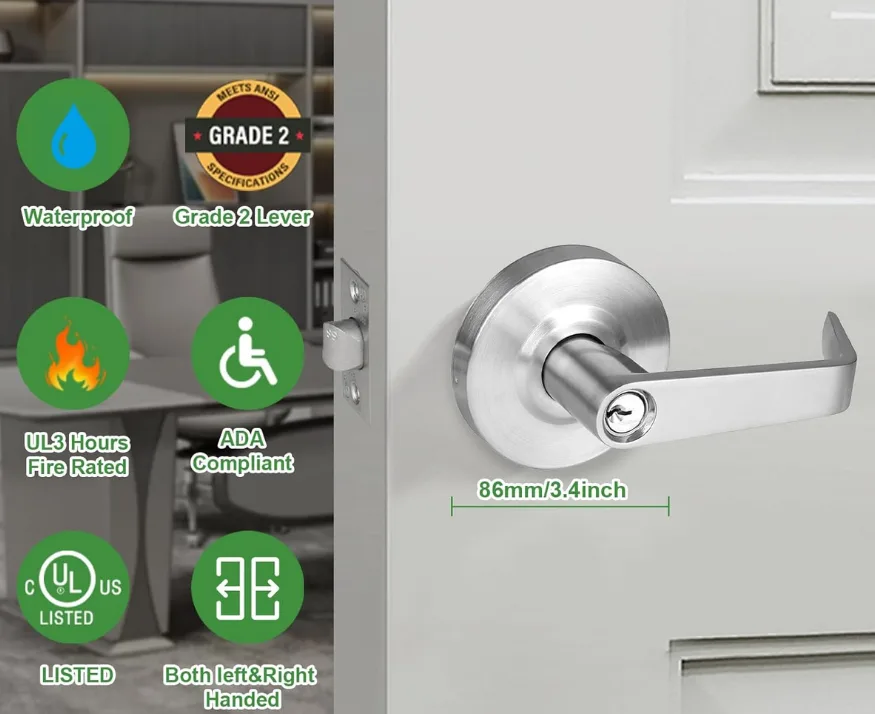
- Key-only exits: Doors that can only be opened with a key from the exit side. The fix: panic hardware, lever handle exit trim, or single-cylinder deadbolt (thumb turn on the interior).
- Excessive force requirements: Exit doors must open with reasonable force. ADA limits interior doors to 5 lbf; NFPA 101 doesn't specify an exact number but requires "reasonable" force.
- Complex unlocking sequences: A door with a deadbolt AND a thumb lock AND a chain that must all be released in sequence before exiting violates the "readily opened" requirement. One motion should release all locking devices.
4. Exit Signs and Emergency Lighting
Every exit door and every point in the egress path where the direction of travel is not immediately obvious must have an illuminated exit sign. Emergency lighting (battery-backed) must illuminate the egress path for at least 90 minutes after power failure. These aren't door hardware per se, but they're part of the complete egress system that the fire marshal inspects alongside your door hardware.
5. Delayed Egress and Access Control Integration
NFPA 101 Section 7.2.1.6.1 permits delayed-egress locks (common in retail loss prevention) under specific conditions:
- Maximum 15-second delay after the person initiates the unlocking action.
- Audible alarm sounds immediately when someone pushes the exit device.
- The lock releases automatically upon fire alarm activation, sprinkler system activation, or power failure.
- The building must be fully sprinklered.
- A sign at the door explains the delay process.
These requirements exist to balance loss prevention with life safety. The 15-second maximum and automatic fire alarm release ensure that delayed egress never prevents escape during an actual emergency.
How the Fire Marshal Enforces NFPA 101
On the Treasure Coast, fire marshal inspections occur:
- Routine annual inspections: Most commercial buildings in St. Lucie, Martin, and Indian River counties are inspected annually. The inspector checks fire doors, exit hardware, emergency lighting, exit signs, fire extinguishers, and sprinkler systems.
- Complaint-driven inspections: An employee, customer, or competitor reports a violation. The fire marshal investigates.
- Post-incident inspections: After a fire, medical emergency, or crowd event, the fire marshal reviews the building's compliance history.
- Certificate of Occupancy / business license renewal: Some jurisdictions require fire marshal sign-off for new businesses or occupancy changes.
What Happens When You Fail an Inspection
- Written violation notice: Specifies the code section violated, the deficiency, and a correction deadline (typically 30-90 days for non-imminent hazards).
- Re-inspection: The fire marshal returns to verify corrections. Re-inspection fees may apply.
- Fines: Continued non-compliance results in fines. Florida law provides for penalties up to $500 per violation per day under F.S. 633.208.
- Closure order: For imminent life safety hazards - blocked exits, chained fire doors, non-functional fire alarm - the fire marshal can order immediate closure until corrections are made.
- Personal liability: Building owners and business operators can be held personally liable for injuries resulting from code violations. If someone is injured or killed in a fire and the exits were non-compliant, the liability exposure is enormous.
The Most Common Violations on the Treasure Coast
Based on our service calls to commercial properties across Port St. Lucie, Stuart, Fort Pierce, and Vero Beach, these are the violations we see most often:
- Fire doors propped open (#1 most common): Doorstops, wedges, and boxes holding fire doors open. The fix: magnetic hold-open devices connected to the fire alarm system ($200-$500 per lock installed).
- Missing or broken panic hardware: Exit doors in assembly occupancy without functioning panic bars. The fix: install code-compliant panic hardware ($400-$1,200 per lock depending on fire rating requirements).
- Fire door closers not functioning: Door closer failed (oil leak, broken arm) and the fire door doesn't close on its own. The fix: replace the closer ($400-$800 installed).
- Exit door locked from inside: Deadbolt or auxiliary lock that prevents exiting without a key. The fix: remove the double-cylinder deadbolt and install a single-cylinder (thumbturn interior) or panic hardware.
- Blocked egress path: Storage, furniture, or displays blocking exit corridors or exit doors. The fix: clear the path (free) and train staff.
How to Prepare for a Fire Marshal Inspection
Walk your building with this 10-point checklist before the fire marshal does:
- All fire doors close and latch on their own - no props, wedges, or blocks.
- All panic hardware operates smoothly - push the bar, door opens, every door.
- All exit signs illuminated - no burnt bulbs, no missing signs.
- Emergency lights function - press the test button, lights come on.
- All exit paths clear - no storage, no furniture, no obstacles.
- Fire door labels visible - not painted over, not removed, not damaged.
- No double-cylinder deadbolts on exit doors.
- Door closers functioning - no oil leaks, proper closing speed.
- Fire extinguishers current - annual inspection tags up to date.
- Access control releases on fire alarm - if you have electronic locks on fire exit doors, verify they release when the fire alarm activates.
If you find violations during your walk-through, fix them before the inspection - it's cheaper to hire a locksmith for proactive repairs than to pay fines and expedited emergency corrections after a failed inspection.
Related Services